
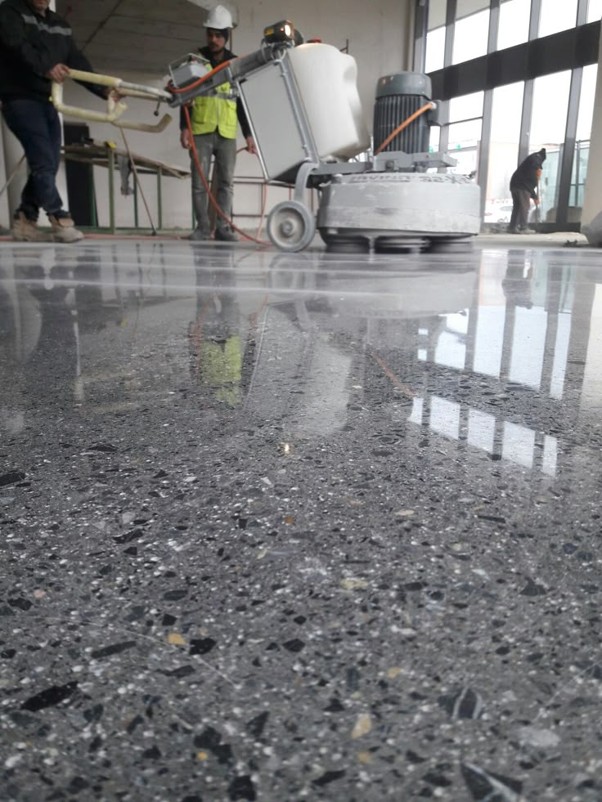
Raw concrete slabs usually look flat, but tiny bumps and deep oil marks hide on top. Putting fresh paint or thin epoxy right onto dirty slabs leads to rapid peeling later. Thorough floor preparation steps remove soft top cream so new coats grip tightly into solid rock underneath. Skipping basic slab cleaning forces owners to pay for expensive repairs when liquid layers lift off. Heavy diamond machinery strips away old glues, hard dirt, and weak cement layers quickly. Taking time to prep raw ground ensures smooth top coats stay tough for years.
Opening Pores in Solid Concrete
Smooth concrete slabs lack open pores needed to grip fresh floor liquid coatings. Heavy diamond blades slice through slick top skins to reveal rough open pores below. Deep micro channels allow liquid resin to sink far down inside raw rock slabs. Mechanical bonding holds top layers down tight against hot car tyre pull. Chemical acid washes often fail because acid leaves damp water spots behind inside. Deep diamond grinding creates reliable mechanical teeth across raw floor spaces. Opening concrete pores protects top coatings against premature flaking or bubbling up.
Removing Tough Old Surface Coatings
Old yellow paint coats and thick tile adhesive layers block fresh resin bonding completely. Scraping thick glues off by hand takes many long hours and leaves sticky spots. Heavy spinning grinder discs shred rubbery adhesives, brittle paint, and hard sealer coats fast. Clearing away legacy materials prevents soft hidden layers from melting under new chemical pours. Workers clear away all dark black mastic tracks before laying down fresh base liquids. Clean bare concrete gives new coatings direct access to strong structural rock layers underneath.
Removing Deep Slab Oil Stains
Car engines drip black oil and greasy fluids directly onto porous garage concrete slabs. Deep grease spots prevent fresh liquid coatings from sticking properly to raw ground. Heavy concrete grinding machines shave off stained top layers until clean grey rock shows up. Removing oil-soaked cement layers stops greasy stains from rising back up through new coatings. Specialty cleaning fluids draw out deep oil residue before fresh liquid application work begins. Clearing oil spots completely creates solid bases that hold fresh top coats for long periods.
Levelling Rough Slab High Spots
Uneven concrete edges create tripping hazards and cause uneven wear on top coatings. High ridges get shaved down flat by heavy diamond grinding heads during early passes. Levelling rough surfaces ensures liquid coatings spread out evenly without pooling inside low spots. Smooth flat floors make rolling tool carts and moving heavy storage boxes simple. Fixing uneven concrete joint lines stops thin top coats from wearing thin on raised edges. Flat ground surfaces look much neater while providing maximum long-term floor durability across wide rooms.
Controlling Fine Concrete Dust Particles
Grinding raw concrete produces clouds of fine white dust that settle over everything nearby. Heavy-duty industrial vacuums attach directly to grinding machines to trap fine dust immediately. Keeping work areas clear of fine powder allows liquid coatings to touch bare concrete directly. Dust left behind on raw slabs creates weak powdery barriers that cause coating failure. Clean air keeps work areas safe while ensuring fresh resins stick onto solid ground. Vacuuming every corner carefully leaves concrete surfaces completely clear for liquid base coat applications.
Maximizing Long Term Coating Adhesion
Fresh liquid resins require rough textured surfaces to form unbreakable mechanical bonds with concrete. Diamond grinding creates an ideal surface profile that locks top coats onto ground slabs. Strong bonds resist heavy vehicle weight, hot tyre marks, and sharp dropped tools easily. Coated floors stay smooth, bright, and easy to clean without peeling or chipping off. Proper floor prep work saves property owners substantial cash on early floor replacement costs. Investing in solid surface prep ensures top coatings stay fully intact for many years.
Conclusion
Proper floor preparation lays the essential foundation for long-lasting, high-performance coating installations everywhere. Mechanical concrete grinding removes weak surface layers, deep oil stains, and old glues while opening slab pores for maximum liquid bonding. Skipping these mechanical steps causes premature coating failure, peeling, and costly surface repairs over time. Check out epoxyflooringredlands.com.au to discover professional floor prep solutions and expert coating services for your home. Investing in thorough surface preparation guarantees durable, beautiful floors that withstand heavy daily use. Proper grinding secures long-term floor strength and reliable surface protection for years.